
FWA V2 is
around the corner.
Explore the new main pool, floor oracle, and pools you can make your own.
Take a look aroundHow the main pool works
V1 introduced a simple choice: make a random purchase, then keep the NFT or take ETH instead. V2 keeps that same flow.

Add an NFT and ETH
The ETH you deposit is its backing. It funds the ETH option if your NFT is selected in a random purchase.

Make a random purchase
Each random purchase uses Chainlink to select an NFT. NFTs with less ETH backing have a higher chance of being picked.

Keep the NFT, or sell back for ETH/FWA
Choose ETH/FWA, and the NFT is bought back by the depositor
How V2 changes backing limits, withdrawals, and launch settlement
V2 aims to keep backing closer to prices people will trade at, discourage quickly taking and leaving the pool's top spot, and make launch payouts easier to track.
| Feature | V1 | V2 |
|---|---|---|
| How much ETH you can add | Any amount above the pool's minimum, with no collection-price limit. | Most listings need a valid oracle price, including when an NFT is relisted or its backing changes. By default, the limit is that price plus 10%. |
| When new random purchases pause | No scheduled pause or removal based on the collection's price. | New random purchases pause at 11:45 to 12:00 and 23:45 to 00:00 UTC. During those windows, anyone can remove listings above the backing limit once pending random purchases finish. A valid oracle price is required. |
| Leaving the pool's top spot | No extra fee for withdrawing the top listing early. | The crown is the pool's top listing. Withdrawing it or reducing its backing within 12 hours of taking the crown costs 1% of its backing before the change. |
| Tracking FWAIR launch payouts | Launches work out the result by checking who holds the NFT. | V2 records the settlement outcome and exact ETH amount, including ETH used to buy FWA. If a recognized launch misses the update, it can read that saved result later. |
| Separate buyback amounts for ETH and FWA | Both used the same configurable rate. | By default, 90% of backing is paid in ETH, or 92.5% is used to buy FWA. The rates can be changed separately. |
| NFT Callbacks | Not supported. | NFTs can add a callback function on their contracts and execute logic based on pool outcomes automatically. |
| Purchasing on behalf of a user | The wallet or contract calling the pool was also the purchaser. | Custom contracts can make random purchases for a user's wallet. The user receives the purchase rewards and controls the NFT or buyback choice, making apps and integrations easier to build on V2. |
| Future ERC1155 and ERC20 adapters | The pool accepts ERC721 NFTs; other asset types need wrappers. | Future adapters could automatically wrap ERC1155 and ERC20 assets as NFTs and deposit them with ETH backing in one transaction, after any required token approvals. V2 can exempt approved adapter collections from NFT floor-price checks. |
Pauses only stop new purchases
You can still collect the NFT or ETH from a random purchase you already made. Depositors can withdraw once pending random purchases finish.
Removing an over-limit listing takes a transaction. Its NFT and ETH then return to the depositor.
FWAIR launch NFTs skip the price limit
FWAIR is FWA's NFT launch system. Recognized launch listings skip the oracle price limit and the fee when a buyer keeps the NFT. A falling price cannot remove them.
The collection must still be allowed, and the crown's early-exit fee still applies. V2 checks any new listing of the NFT again.
How the price oracle works
The oracle records a reference price for an NFT collection. V2 normally allows ETH backing up to 10% above that price.
Deposit an NFT and ETH
Choose a price for an NFT from an allowed collection. Deposit the NFT and ETH equal to 90% of that price. This opens two offers to test the price you propose.
 Your NFT is offered for saleYour chosen priceAnyone can buy the NFT you deposited at this price.
 Your ETH funds a buy offer90% of your priceAnyone can sell you another NFT from the same collection for this amount.
Wait until the contract's deadline
The V2 launch setting is six hours. Your deadline is fixed when the test starts, even if the setting changes later. You cannot cancel it. Taking either offer ends the test early.
See whether an offer was taken
The proposed price can be recorded after the deadline
Anyone can finalize the test after the deadline. The oracle checks it still holds your NFT, records your proposed price, and returns your NFT and ETH. Failed returns stay available to claim.
Valid reference priceAdd 10% by defaultV2 backing limit for this collection
Anyone can test a collection's proposed price through real trades. The oracle owner can also set or clear reference prices.
Launch your own standard or buyback pool
Choose the NFTs and set their values, including rare NFTs priced above their collection's floor. Custom pools have no floor-price cap. A standard pool gives buyers an NFT. A buyback pool lets them choose between the NFT and ETH you set aside for it.
Protocol fees from custom pools will support the main pool by funding FWA buybacks and rewards for its depositors and purchasers.
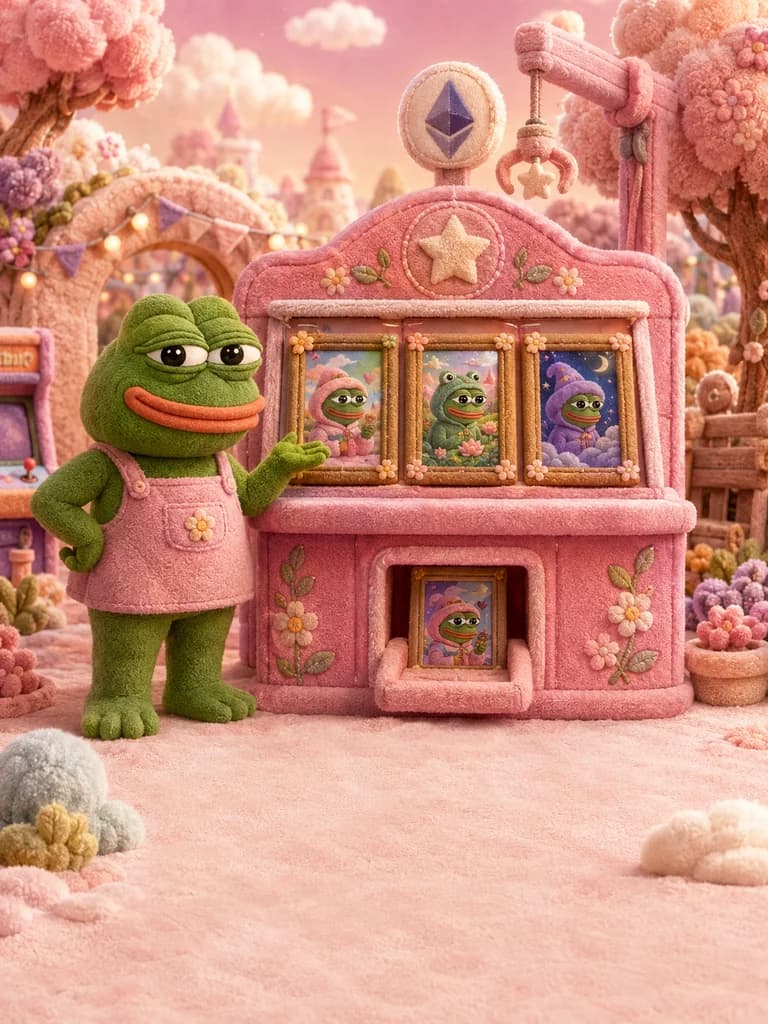
Standard pools deliver the selected NFT
List NFTs and set their values without depositing ETH.
- ETH backing
- None
- Buyer receives
- The selected NFT
- When you withdraw
- Your NFT returns
- Auto reload
- Not available
The value you choose sets the selection probabilities. It does not promise a resale price or an ETH payout.

Buyback pools offer the NFT or an ETH payout
Back each NFT with ETH to fund the buyer's choice.
- ETH backing
- Fully funded per NFT
- Buyer receives
- NFT or 90% of backing by default
- When you withdraw
- Your NFT and backing return
- Auto reload
- Optional, with a funded reserve
The random purchase payment is separate from the ETH reserved for the NFT. Shared pool settings determine the payout percentages.
Inventory edits pause purchases for five minutes by default
Each edit restarts the waiting period. The contract rejects new purchases submitted against an earlier inventory version.
Withdrawals and price changes wait for pending random purchases
Wait until pending random purchases finish before removing NFTs or changing their values. You can still deposit new NFTs, which wait to join the active pool when needed.
Each random purchase gets its own Chainlink result
One Chainlink service provides randomness for all public pools. Each random purchase has its own result, and each pool handles its results in order.
Buyback pools can relist returned NFTs using a funded reserve
Keep extra ETH in the pool and turn on auto reload. When a buyer takes ETH, the returned NFT can be listed again with full new backing. If it cannot be relisted, the buyer still receives an ETH credit to claim and you can recover the NFT.
Restrict purchases to selected wallets
Pool owners can limit random purchases to a list of approved wallets, giving a community or selected group exclusive access to their pool.
A pool's owner and contract code cannot change. Shared settings, including fees, waiting periods, and who can create a pool, can change.
Withdrawals, transaction counts, fees, and access rules
Can I still withdraw an NFT?
Yes. In the main pool, you can withdraw your active listing and recover its NFT and backing after all unresolved random purchases clear. Accrued earnings remain claimable. The 1% fee only applies if you voluntarily exit the crown within 12 hours of taking it. An oracle removal returns the full backing without that fee. In a public standard pool, withdrawal returns the NFT. In a public buyback pool, it returns the NFT and backing. Only that pool's owner can withdraw its listings.
Can I change the price or backing?
Yes, once unresolved random purchases clear. Main-pool backing changes must pass the current oracle check, including decreases, unless the listing has the FWAIR exemption or its collection has an oracle exemption. Add ETH to increase backing; a decrease returns the difference, less any early-crown fee. A public standard pool changes its owner-set price without ETH. A public buyback pool adds or refunds the backing difference. Public-pool changes also restart that pool's purchase cooldown and change its inventory version.
How many transactions does listing take?
The core contracts list one NFT per transaction. Batch acquisition means making several random purchases, not depositing several NFTs. For a new public pool with five NFTs from one collection, starting without approvals and with a zero creation fee, plan for eight transactions: create the pool, approve the collection, list each of the five NFTs, then enable purchases. An existing collection approval removes one step. A nonzero creation fee may need a separate FWA approval. Funding and enabling auto reload add their own setup calls.
What happens when a buyer takes the ETH?
The NFT goes back to its depositor in the main pool. A buyer can also keep and relist an NFT with fresh backing in one settlement transaction. That is a one-time choice. Persistent auto reload belongs to public buyback pools: the owner enables it and funds a reserve large enough to cover the returned NFT's full backing. If reload cannot happen, the ETH outcome still settles and the NFT returns to the owner or becomes recoverable. Public standard pools have no ETH outcome or auto reload.
Who can create a public pool?
Initially, beta users who lock their FWAIR PFPs will be able to create public pools. Later, pool creation will open to everyone for a fee in $FWA.
How do public-pool selection probabilities and fees work?
Selection weight is the inverse of each listing's price or backing. Halving a listing's value doubles its weight relative to the others. The random purchase price is the resulting expected value plus the factory's markup, initially 5%, with a separate randomness fee. The pool owner receives the base price plus half the markup; the protocol receives the other half. In a buyback pool, the initial ETH outcome credits the buyer 90% of backing and the protocol 10%. Keeping the NFT returns 90% of backing to the owner and 10% to the protocol. The factory can change these settings, and settlement percentages apply when the position settles.
How long does a public-pool buyer have to choose?
A standard pool delivers the selected NFT without a buyback decision. By default, a buyback pool gives the buyer six hours of exclusive choice after the NFT is allocated. After that, the owner can also resolve either outcome. After 24 hours from allocation, anyone can finalize the NFT outcome. The buyer can still choose until someone settles the position. The factory can change both windows, including for positions already allocated. Taking ETH creates a credit; the buyer then makes a separate transaction to claim it.
Does V2 move my V1 positions or replace FWA?
No. V2 is a separate deployment, and existing V1 listings stay in V1. The design reuses the FWA token and its liquidity. V2 has its own rewards and buyback contracts, and the deployment plan routes public-pool protocol fees to the V2 buyback. It also changes where future shared token-market fees go. Existing V1 listings and ETH already paid to older recipients are not moved by those routing changes.